



ACSL Family
Specifically, ACSL3 inhibits lipid peroxidation by enriching monounsaturated fatty acids, thereby protecting tumor cells from damage. ACSL4 is predominantly enriched in adrenal and brain tissues; it specifically favors the activation of 20-carbon polyunsaturated fatty acids (PUFAs), acts as a core executor driving ferroptosis, and participates in the JAK-STAT1-IRF1 signaling axis. In various malignancies-such as hepatocellular carcinoma and breast cancer-ACSL4 exerts pro-tumorigenic effects and is associated with poor prognosis. Conversely, ACSL5 is primarily distributed in the intestine, localizes to mitochondria, and prefers 16-18 carbon fatty acids; it suppresses the Wnt signaling pathway by mediating the palmitoylation of the Wnt2B protein, typically functioning as a tumor suppressor gene and exerting protective effects in pancreatic cancer. However, in gastric cancer, ACSL5 is aberrantly overexpressed due to promoter hypomethylation, which paradoxically promotes the proliferation and metastasis of tumor cells[1][2][3].
The expression of the ACSL family is under strict regulation by signaling pathways-such as JAK-STAT and PPAR-as well as epigenetic mechanisms; functional abnormalities within this family are closely implicated in various malignancies-including hepatocellular carcinoma and breast cancer-as well as metabolic disorders. Inhibitors specifically targeting ACSL4 and ACSL5-such as troglitazone and tolcapone-hold potential for clinical application in precisely disrupting tumor metabolism or mitigating tissue damage[1][2][3].
- [1]. Acyl-CoA Synthetase Long Chain Family Member 4 Overview. subject area: Biochemistry, Genetics and Molecular Biology. Sciencedirect Topic.
- [2]. Gan B. ACSL4, PUFA, and ferroptosis: new arsenal in anti-tumor immunity. Signal Transduct Target Ther. 2022 Apr 22;7(1):128. [Content Brief]
- [3]. Quan J, et al. ACSL family: The regulatory mechanisms and therapeutic implications in cancer. Eur J Pharmacol. 2021 Oct 15;909:174397. [Content Brief]
ACSL Family Isoform Specific Products
All Product Categories
-
ACSL Family Related Products (40)
Related Products (40)

-
ACSL Family Isoform Comparison
- 1
- 2
-
Acsl1 Mouse Pre-designed siRNA Set A
 0 ImagesCat. No.: HY-RS16255Acsl1 Mouse Pre-designed siRNA Set A contains three designed siRNAs for Acsl1 gene (Mouse), as well as a negative control, a positive control, and a FAM-labeled negative control.
-
Acsl6 Mouse Pre-designed siRNA Set A
 0 ImagesCat. No.: HY-RS20850
Acsl6 Mouse Pre-designed siRNA Set A contains three designed siRNAs for Acsl6 gene (Mouse), as well as a negative control, a positive control, and a FAM-labeled negative control.
-
Ferroptosis inducer-9
 0 ImagesCat. No.: HY-175698Ferroptosis inducer-9 is a ferroptosis inducer and colchicine site tubulin polymerization inhibitor. Ferroptosis inducer-9 inhibits MCF-7 cell growth with an IC50 of 14 nM and inhibits [3H]colchicine binding. Ferroptosis inducer-9 reduces expression of GPX4 and FTH, increases COX2 and ACSL4, lowers GSH, NADP+, and NADPH levels, increases LPO, MDA, and Fe(II) levels, and decreases SOD concentrations. Ferroptosis inducer-9 demonstrates significant anti-tumor efficacy in HCT116 CRC xenograft model. Ferroptosis inducer-9 can be used for the study of triple negative breast cancer (TNBC) and colorectal cancer (CRC).
-
ACSL6 Human Pre-designed siRNA Set A
 0 ImagesCat. No.: HY-RS00204
ACSL6 Human Pre-designed siRNA Set A contains three designed siRNAs for ACSL6 gene (Human), as well as a negative control, a positive control, and a FAM-labeled negative control.
-
DOPE (GMP)
 0 ImagesCat. No.: HY-112005GCAS No.: 4004-05-1Synonyms: Dioleoylphosphatidylethanolamine (GMP); 1,2-Dioleoyl-sn-glycero-3-phosphoethanolamine (GMP)DOPE GMP is DOPE (HY-112005) produced by using GMP guidelines. GMP small molecules works appropriately as an auxiliary reagent for cell therapy manufacture. DOPE (Dioleoylphosphatidylethanolamine; 1,2-Dioleoyl-sn-glycero-3-phosphoethanolamine) is an orally active inhibitor of ferroptosis with anti-inflammatory and intestinal barrier maintenance activities. DOPE regulates the expression of ACSL4, SLC7A11 and GPX4 to restore the redox system balance, thereby reducing the levels of lipid peroxides, iron ions and intestinal inflammatory factors (IL-1β and IL-6). DOPE promotes the migration and proliferation of intestinal epithelial cells and increases the level of tight junction proteins; it also destabilizes endosomal membranes, mediates the conjugation of RVG peptides with mesenchymal stem cell-derived exosomes to enhance brain targeting. DOPE can be applied to research related to neonatal necrotizing enterocolitis and Alzheimer's disease.
-
Ferroptosis inducer-8
 0 ImagesCat. No.: HY-174345CAS No.: 3097194-74-3Ferroptosis inducer-8 is a ferroptosis inducer with high selectivity for other cell death mechanism. Ferroptosis inducer-8 induces ferroptosis by affecting ACSL4, GPX4, and FTH1, thereby disrupting intracellular iron homeostasis and the GSH/GPX4 antioxidant defense system, ultimately leading to the accumulation of lipid peroxidation. Ferroptosis inducer-8 also induces ROS production. Ferroptosis inducer-8 inhibits tumor growth and can be used for research of triple-negative breast cancer (TNBC).
-
Ferroptosis/apoptosis inducer-5
 0 ImagesCat. No.: HY-183791ACAS No.: 2243423-32-5Ferroptosis/apoptosis inducer-5 is an orally active inducer of Ferroptosis and Apoptosis. Ferroptosis/apoptosis inducer-5 downregulates GPX4, upregulates ACSL4, promotes ROS production, activates the Caspase cascade, induces Mitochondrial dysfunction, and alters the Bcl-2/Bax balance. Ferroptosis/apoptosis inducer-5 significantly inhibits tumor growth in a pancreatic cancer xenograft mouse model. Ferroptosis/apoptosis inducer-5 can be used for the research of pancreatic cancer.

-
Lepadin E
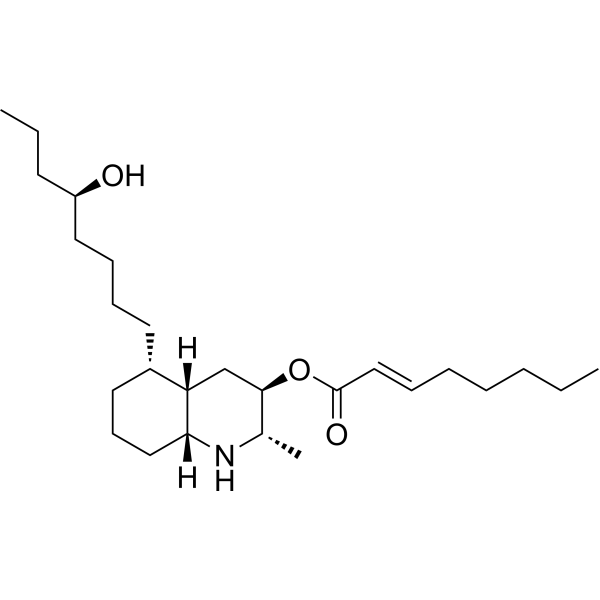 0 ImagesCat. No.: HY-155851CAS No.: 444914-19-6Lepadin E is a significantly cytotoxic ferroptosis inducer that induces iron death through the classical p53-SLC7A11-GPX4 pathway. Lepadin E promoted p53 expression, decreases SLC7A11 and GPX4 levels, and leads to increased ROS and lipid peroxide production, and upregulated ACSL4 expression, thus causes cell death. Lepadin E has significant antitumor effect.
-
Antitumor agent-122
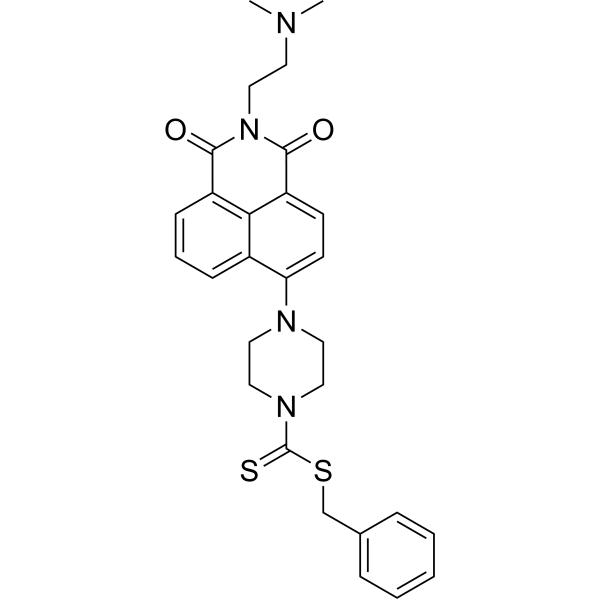 0 ImagesCat. No.: HY-149717CAS No.: 2378641-43-9Antitumor agent-122 is a potent multi-target antitumor agent that exerts its effects through the induction of ferroptosis, autophagy, apoptosis, and cell cycle arrest. In the ferroptosis pathway, Antitumor agent-122 inhibits GPX4 expression and upregulates FACL4 expression, increasing intracellular lipid peroxidation and ferrous ion levels. In the autophagy pathway, Antitumor agent-122 induces autophagy by inhibiting the AKT/mTOR signaling pathway. In the apoptosis and cell cycle pathways, Antitumor agent-122 arrests cells at the G1/S phase and subsequently promots mitochondrial pathway-mediated apoptosis. Antitumor agent-122 can be used in the research of solid tumors including gastric, liver, ovarian, and bladder cancers.
-
Lepadin H
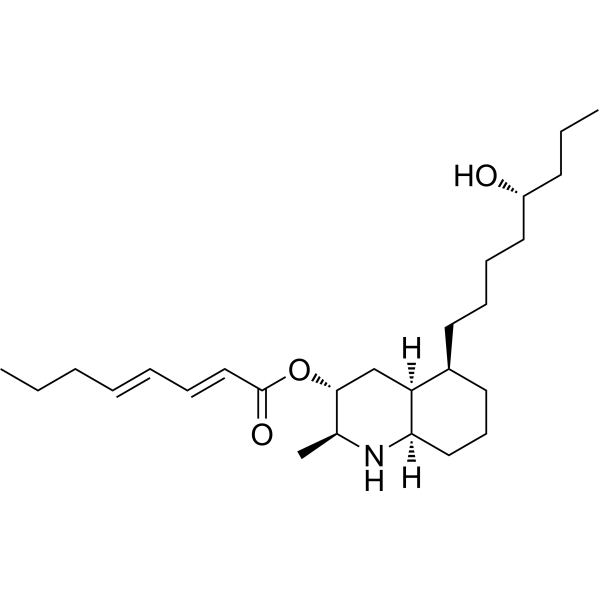 0 ImagesCat. No.: HY-155852CAS No.: 412328-25-7Lepadin H is a ferroptosis inducer and apoptosis inducer with in vitro cytotoxicity and in vivo antitumor efficacy against cancer cells. Lepadin H reduces GPX4 and SLC7A11 levels, increases p53 and ACSL4 expression, drives lipid hydroperoxide production, elevates reactive oxygen species (ROS) levels, reduces cellular glutathione (GSH) levels, induces lipid peroxidation and G2/M phase cell cycle arrest, and suppresses clonogenic growth and migration of cancer cells.Lepadin H can be used for the research of melanoma.
-
ACSL5-IN-4
 0 ImagesCat. No.: HY-186084CAS No.: 3098298-20-2ACSL5-IN-4 (the 9th compound in Table 115) is an ACS5 inhibitor, with its IC50 value for hACS5 being less than 100 nM. ACSL5-IN-4 can be used for research in digestive and oncological diseases.
-
PROTAC FSP1 degrader 1
 0 ImagesCat. No.: HY-179384CAS No.: 3096510-51-6PROTAC FSP1 degrader 1 is a highly efficient and selective PROTAC degrader targeting FSP1. PROTAC FSP1 degrader 1 significantly induces the accumulation of intracellular lipid peroxides. PROTAC FSP1 degrader 1 exhibits synergistic induction of ferroptosis with GPX4 inhibitors. PROTAC FSP1 degrader 1 can induce ROS production. PROTAC FSP1 degrader 1 upregulates the mRNA expression of ferroptosis-related proteins (GPX4, FTH1, ACSL4, TfR1, FSP1). PROTAC FSP1 degrader 1 can be used for the study of triple-negative breast cancer.
-
Fluorofenidone (Standard)
 0 ImagesFluorofenidone (Standard) is the analytical standard of Fluorofenidone (AKF-PD) (HY-121246). This product is intended for research and analytical applications. Fluorofenidone is an orally active compound with anti-fibrotic, antioxidant, and anti-inflammatory pharmacological effects. Fluorofenidone downregulates the expression of ACSL4, upregulates GPX4 expression and inhibits the NF-κB signaling pathway to alleviate inflammation and fibrosis. Fluorofenidone ameliorates cholestasis and fibrosis by inhibiting hepatic Erk/-Egr-1 signaling and Tgfβ1/Smad pathway in mice. Fluorofenidone demonstrates protective effects against chronic lung injury in mice. Fluorofenidone can be used for the study of chronic obstructive pulmonary disease (COPD), pulmonary interstitial fibrosis (PIF) and non-small cell lung cancer (NSCLC).
-
Fluorofenidone-d3
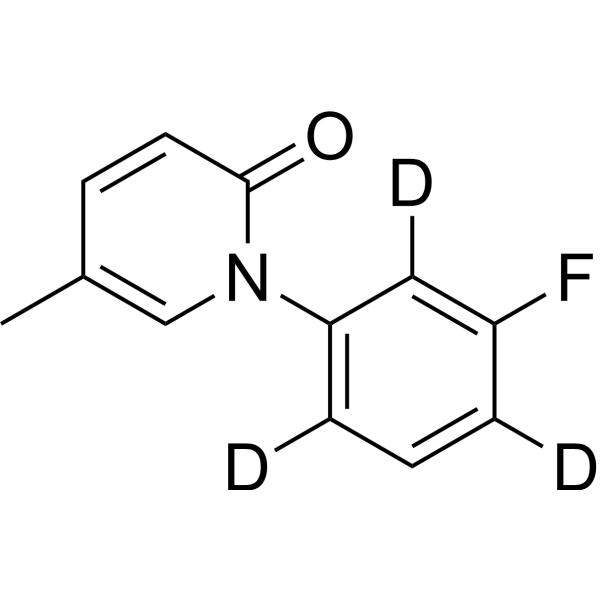 0 ImagesCat. No.: HY-121246SSynonyms: AKF-PD-d3Fluorofenidone-d3 (AKF-PD-d3) is deuterium labeled Fluorofenidone (AKF-PD) (HY-121246). Fluorofenidone is an orally active compound with anti-fibrotic, antioxidant, and anti-inflammatory pharmacological effects. Fluorofenidone downregulates the expression of ACSL4, upregulates GPX4 expression and inhibits the NF-κB signaling pathway to alleviate inflammation and fibrosis. Fluorofenidone ameliorates cholestasis and fibrosis by inhibiting hepatic Erk/-Egr-1 signaling and Tgfβ1/Smad pathway in mice. Fluorofenidone demonstrates protective effects against chronic lung injury in mice. Fluorofenidone can be used for the study of chronic obstructive pulmonary disease (COPD), pulmonary interstitial fibrosis (PIF) and non-small cell lung cancer (NSCLC).
-
Acsl3 Rat Pre-designed siRNA Set A
 0 ImagesCat. No.: HY-RS25472
Acsl3 Rat Pre-designed siRNA Set A contains three designed siRNAs for Acsl3 gene (Rat), as well as a negative control, a positive control, and a FAM-labeled negative control.
-
Acsl3 Mouse Pre-designed siRNA Set A
 0 ImagesCat. No.: HY-RS18983
Acsl3 Mouse Pre-designed siRNA Set A contains three designed siRNAs for Acsl3 gene (Mouse), as well as a negative control, a positive control, and a FAM-labeled negative control.
-
Acsl1 Rat Pre-designed siRNA Set A
 0 ImagesCat. No.: HY-RS24003
Acsl1 Rat Pre-designed siRNA Set A contains three designed siRNAs for Acsl1 gene (Rat), as well as a negative control, a positive control, and a FAM-labeled negative control.

-
Acsl6 Rat Pre-designed siRNA Set A
 0 ImagesCat. No.: HY-RS27364
Acsl6 Rat Pre-designed siRNA Set A contains three designed siRNAs for Acsl6 gene (Rat), as well as a negative control, a positive control, and a FAM-labeled negative control.
- 1
- 2



